


NEED HELP COMPLETING YOUR QUOTE? Call our assistant for quick step by step guidance. 0345 300 0065
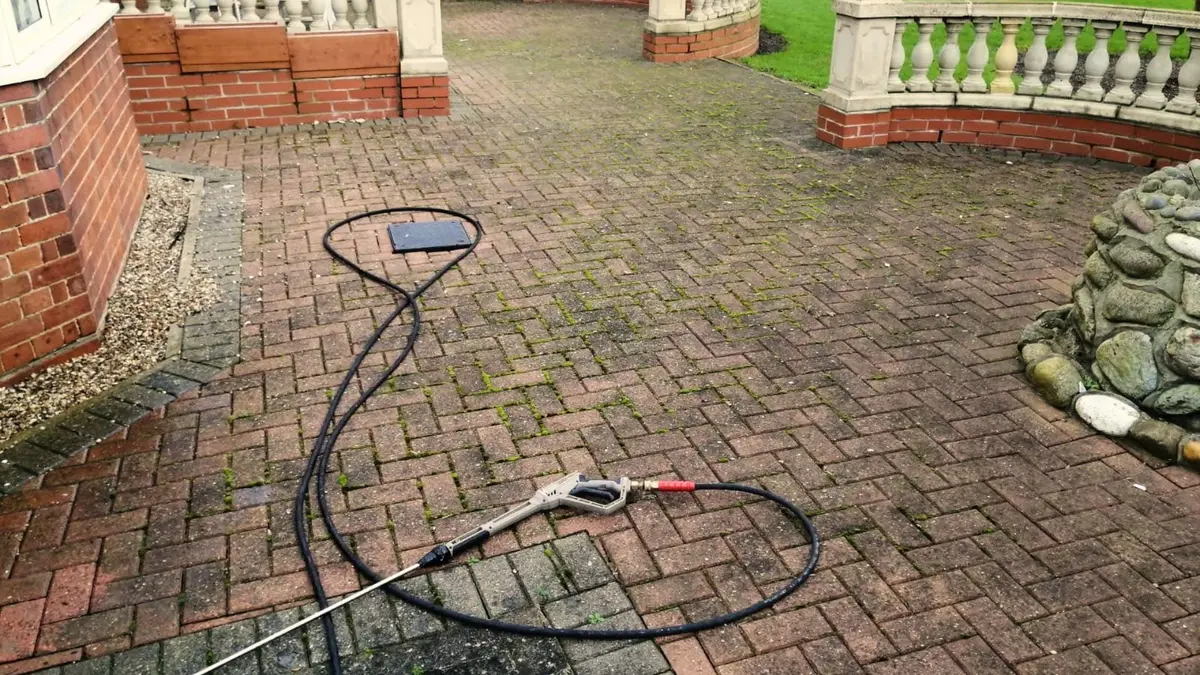
Rain leaves a layer of water on paving and decking, and where those growths have taken hold, footing gets treacherous. Algae, moss, lichen and liverworts all favour the same conditions: damp, shade and little airflow.
Shorter days and a lower sun mean walls, fences and trees cast longer shadows, so shaded surfaces stay wet for longer because the moisture never fully evaporates between showers. Moss acts like a sponge in shady joints and cracks, holding water and expanding in damp weather, while algae grows rapidly in the same damp, low-light conditions: when wet, it produces a slick, oil-like film on stone, concrete and timber. Lichen forms thin, flat crusts on paving and stone, and in dry, bright conditions it can look almost white. That is why a surface may look fine after a dry spell, then feel slippery again after rain.

Start with the routes you use most: the path to the front door, steps, the way to the bins, and the route between the house and garden, in both dry and wet weather. Take extra care with shaded corners, areas beneath trees and places where water tends to linger: the same damp, low-light spots that moss uses as a home and where algae grows fastest.
As you check, look for:
A surface does not need to look dramatically overgrown to be slippery. If it feels slick underfoot after rain, treat it as a potential hazard and use another route until it is safe to walk on.
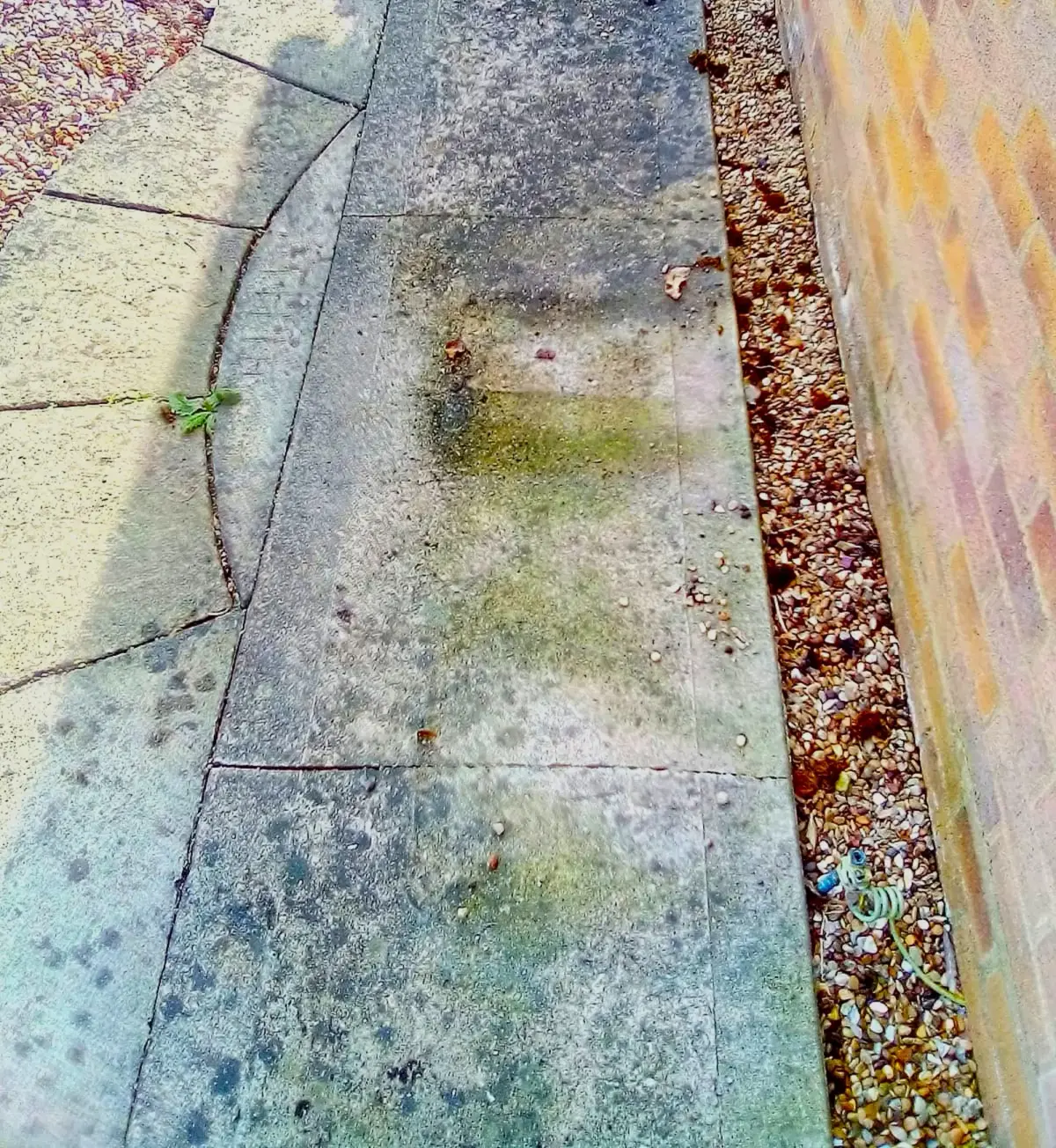
One thing keeps a surface hazardous long after the rain has stopped: water that cannot escape.
A blocked outlet or a low spot leaves a path or patio damp for longer, giving algae and moss the conditions they need to return. Where you can, a slight slope or falling level on paths and drives helps water run away rather than pool, and clearing leaves from drains keeps that escape route open. If water repeatedly gathers in the same place, cleaning alone may not address the cause.
Trapped water also works on the surface itself. Water sitting in cracks or joints can widen existing damage over time, which is one more reason drainage is worth checking alongside the cleaning.
A professional clean removes accumulated dirt and biological growth from the surface. The method needs to suit the stone, paving or decking, its condition, and the access available. Depending on the job, we may use soft washing or jet washing. I approach each job individually, considering the material, the process and the environment, because what works on one surface may not suit another.
Cleaning is only ever one part of the answer: drainage and repairs each play their part, which is why every job starts with an assessment rather than a standard approach. Before we begin, we assess the surface and explain what we think is achievable. Old, stubborn or deep biological-growth stains may remain, even after cleaning. We also take account of areas that look fragile or have existing damage, because excessive pressure can affect some surfaces and joints.
As well as removal of visible micro-plants, we offer eco-friendly biocide treatments that treat organic growth on the surface and keep working after the clean, helping to slow regrowth on the treated surface. They are not a substitute for good drainage or regular sweeping, but they can form part of a considered cleaning approach.
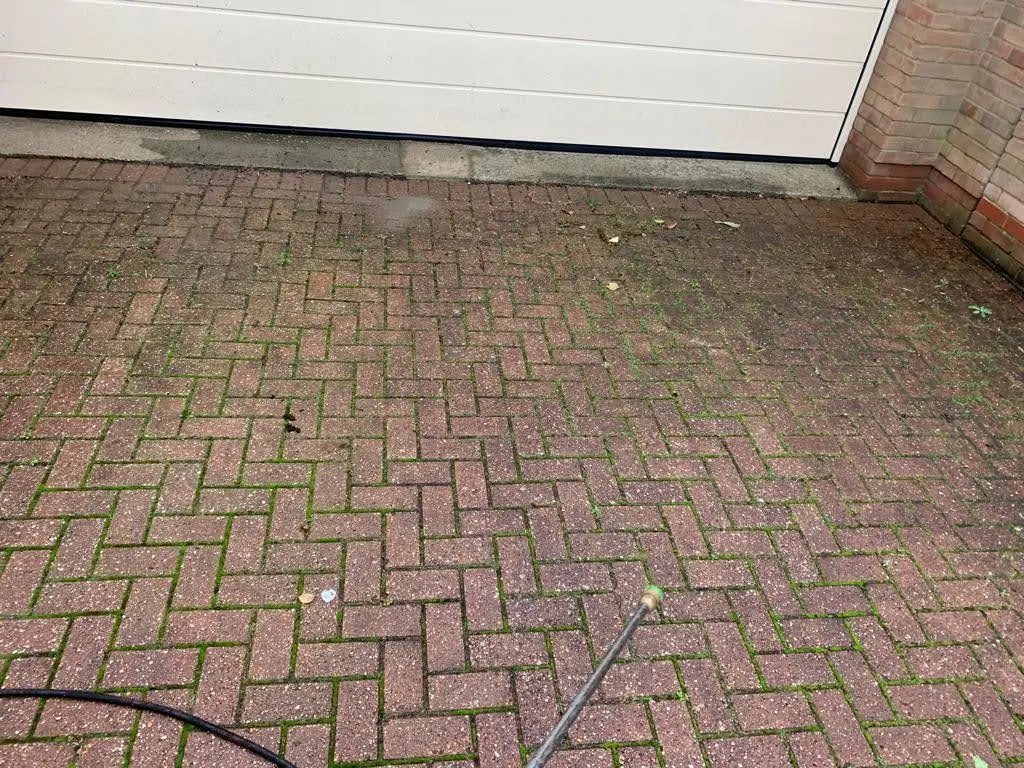
It is worth knowing that a freshly cleaned surface needs time: people and pets should stay clear of the work area while it is being cleaned, and the surface should dry before it is walked on again. A wet surface can still be slippery, even after the visible growth has been removed, so the job is not finished the moment the last patch of growth disappears.
Cleaning block paving can remove some of the jointing sand between the blocks. Where appropriate, we re-sand after cleaning to restore the block-paving finish. The surface needs to be dry enough for the sand to be brushed into the joints properly.
Re-sanding helps finish the clean, but it does not correct loose or moving blocks. If sections have sunk or shifted, that points to a repair question rather than a cleaning one, and we would say so during the assessment.
A few habits make the hazards above easier to manage:
These steps help with upkeep, but take care with DIY cleaning. Wet surfaces can be slippery during the work, and using unsuitable equipment or too much pressure may damage a surface or disturb its joints. Wet weather adds further complications: ladder work can prove difficult with wet, soft ground or unstable surfaces to place footings on, slippery rungs and awkward, wet handling of tools. If you are unsure how to clean a particular area safely, getting an experienced cleaner to assess it is a sensible option.

Alongside Driveway, Patio and Path Cleaning, we also provide Gutter Cleaning, Fascia and Soffit Cleaning, Roof Cleaning, Solar Panel Cleaning, Conservatory Cleaning, Cladding & Render Cleaning and Commercial Services.
If your patio or paths have become slippery, you can get an instant quote and book online at guttercleaningquote.co.uk. The tick-box questions collect the details we need for most jobs, so we can usually quote without arranging a site visit.


Page generated in 0.0001 seconds.
24/7 Sales Tool v3.0